






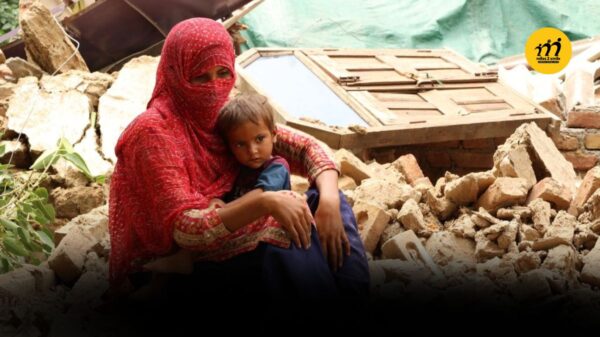

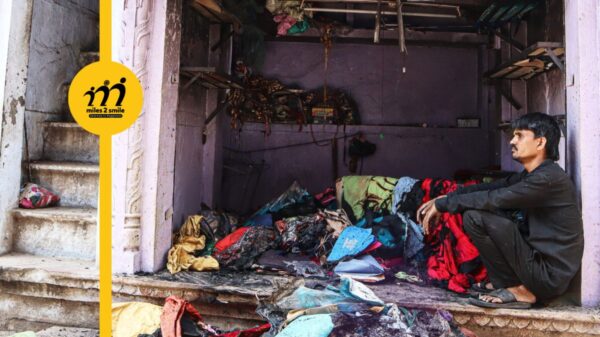
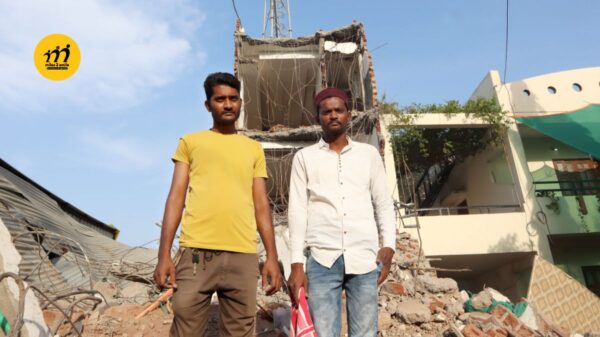
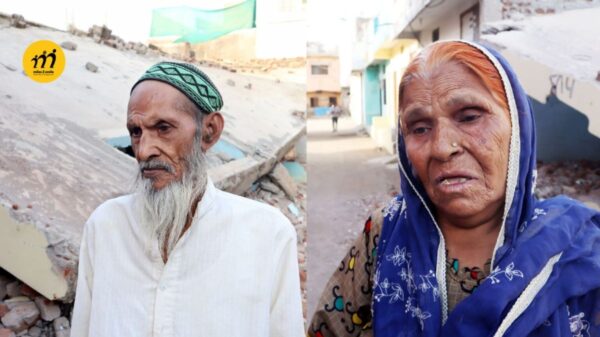

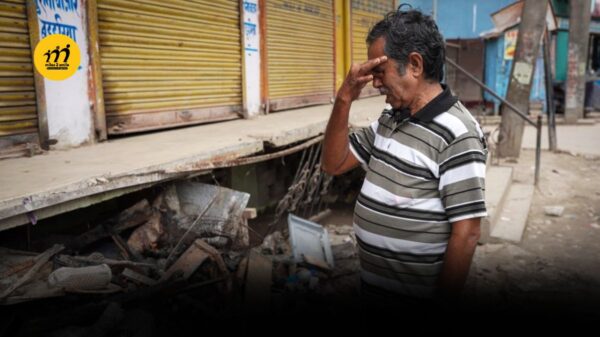









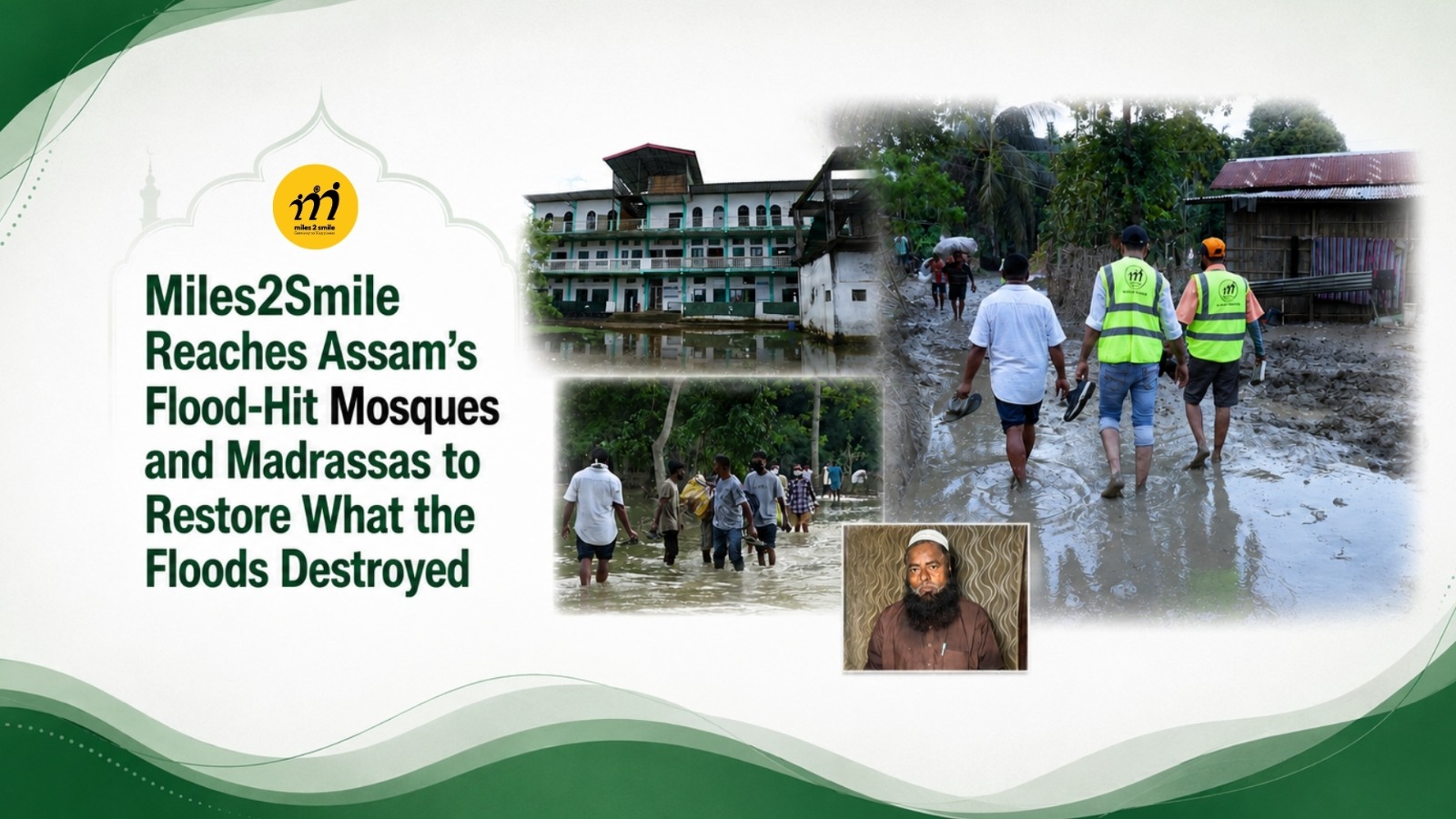

As the month of July was bidding farewell to the people of Assam, it swept with it the houses, trees, cattle, and human lives in a deadly deluge while devastating peace. It claimed 80 lives, affected as many as 1.8 lakh people across the state, and more than 2,000 villages remain impacted.
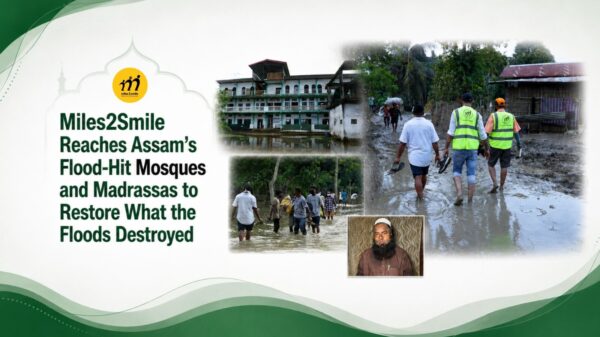
Notably, Assam is one of India’s most flood-prone states, with approximately 40 percent of its land vulnerable to it. As news of Assam got wind, Miles2Smile took its routes towards it and conducted the relief work. We traveled to Shivsagar, Nepali Khuti, Ramu Goan, and Muliyaghata. While travelling across these areas, we conducted surveys, waded through knee-deep water, and provided relief.
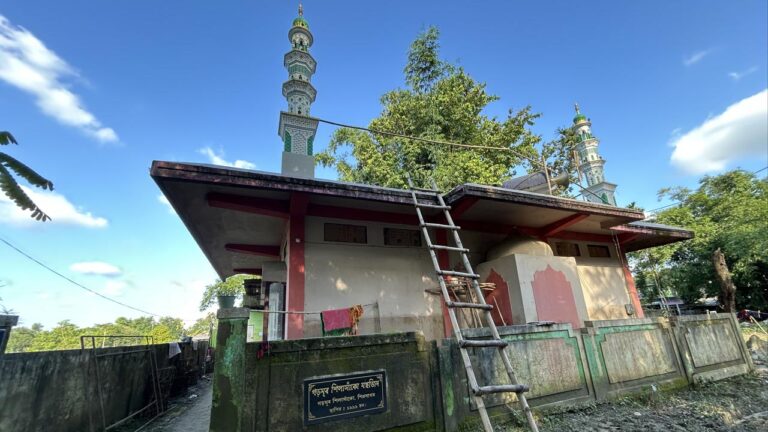
Amidst all these were the stories of survivors, which punctured our hearts and left us hollow. Bowing down in front of the Lord of mercy was the only way of seeking placidness. We headed toward the mosque, a place of pure comfort. One by one we passed several of them; however, the deluge did not spare them either.
The saf carpets (prayer carpets) in the masjid were swollen, torn, and swept away. The holy books were drenched, speakers and amplifiers malfunctioned due to water ingress, and the ablution block (Wazu Khana) was crushed into pieces.
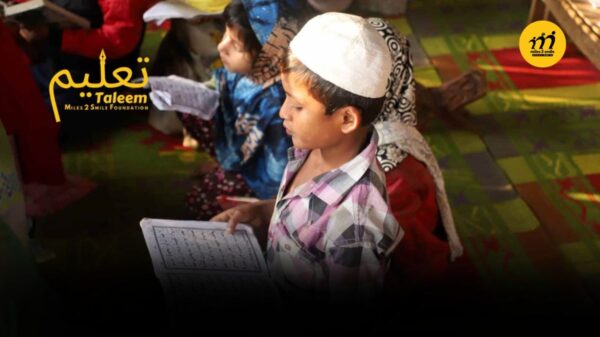
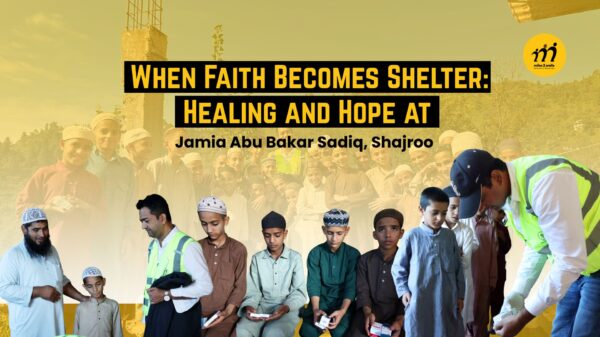
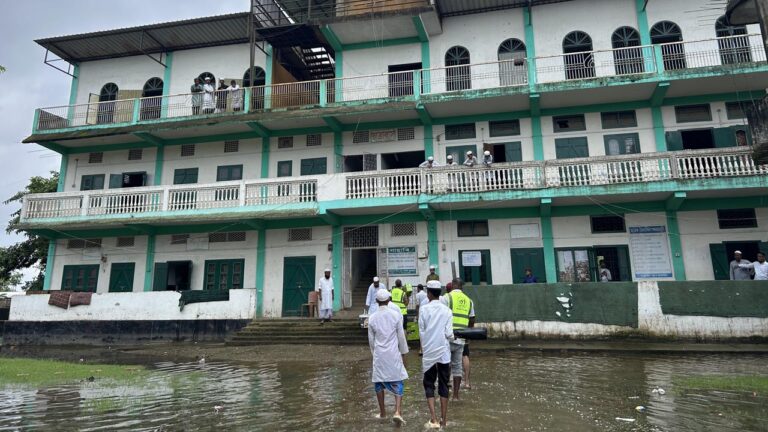
Furthermore, when the team walked in the remnants of Madrassas, it learned that book pages had absorbed substantial moisture and bindings were expanded; uniforms of the children were unwearable due to water damage; the inverters had permanent operational disruption; and mats looked similar to those of mosques—torn, swollen, and unusable.
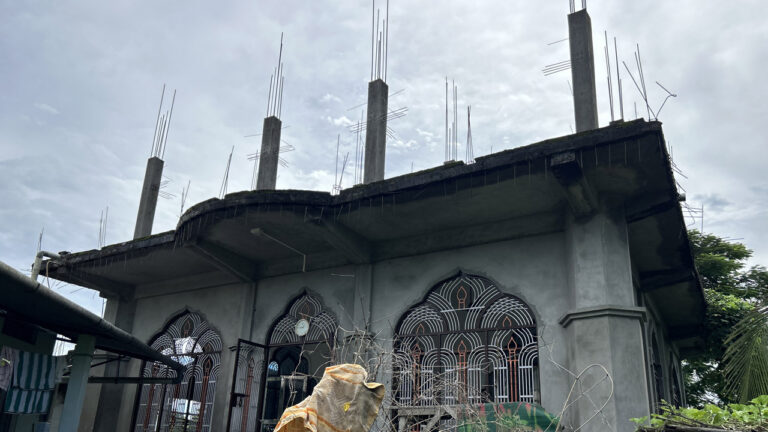
After witnessing the condition, the thought lurked in our minds—to fix the broken pieces of mosques and madrassas. Soon, the next day, we found ourselves with mics, amplifiers, inverters, and more in the alleys of mosques and madrassas.
With threads of love we tried to stitch back the torn parts of them. Each stitch reminded us of the long way that we are yet to travel. As we glued the patches, the faces of people associated with the mosques lit with happiness, proving to us the relief our hearts were yearning for.
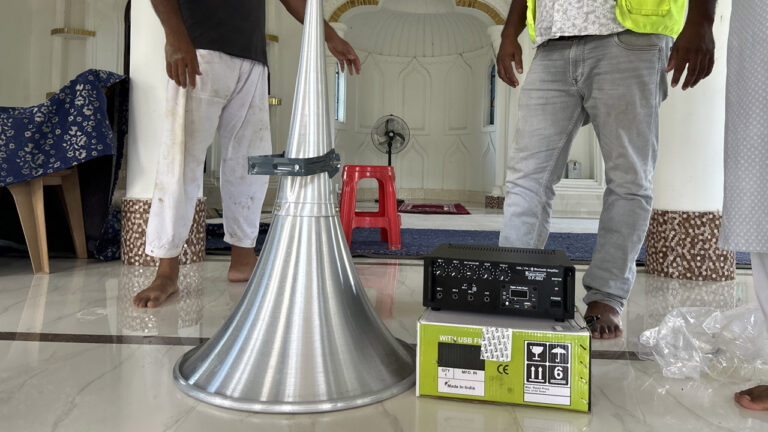
As we moved inside the mosque with essentials, the imams of the mosque embraced us with teary eyes, reminding us of the love we yearned for, warming our hearts, and rejuvenating our souls. The revamping of the mosques opened doors of spirituality for people marooned in the atrocities, and the madrassa refreshed the lost education.