








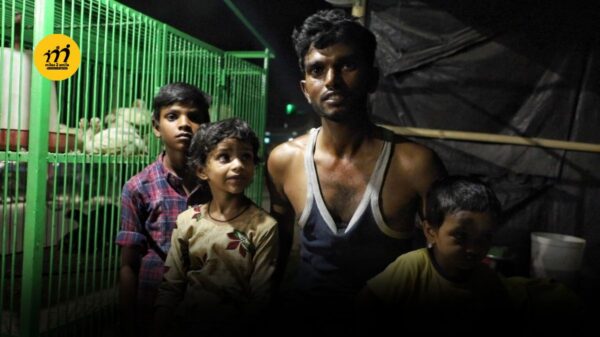
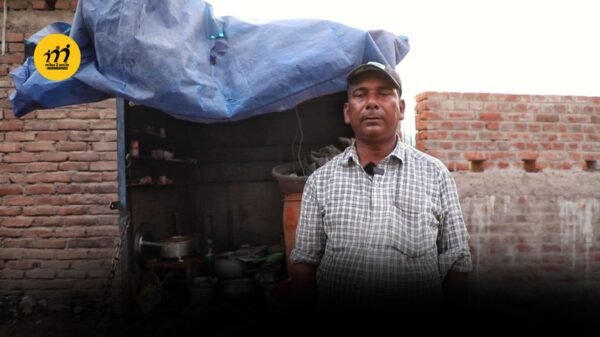

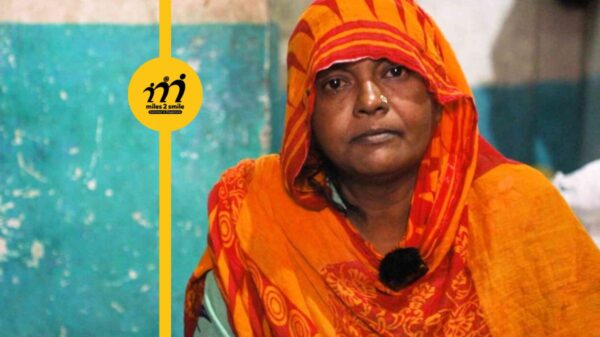
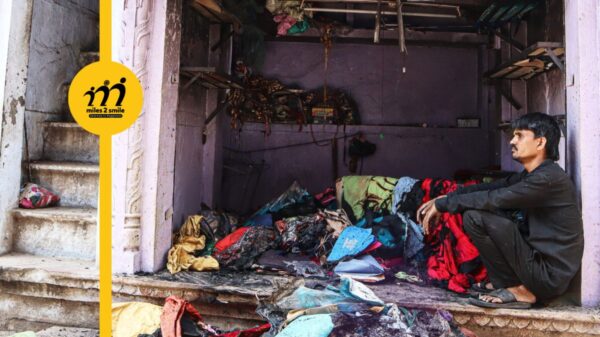
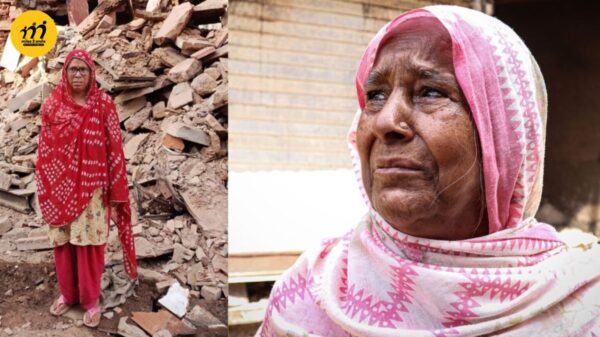
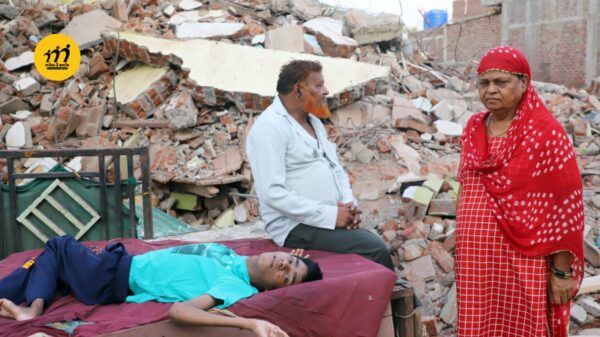
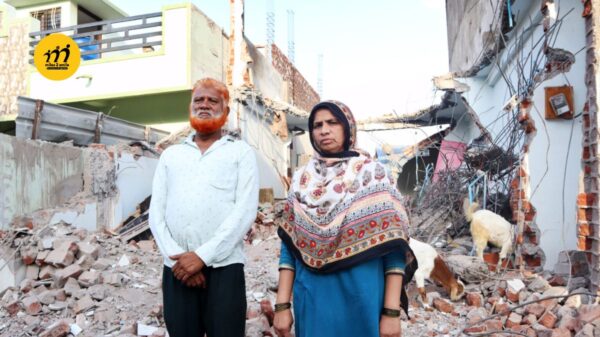
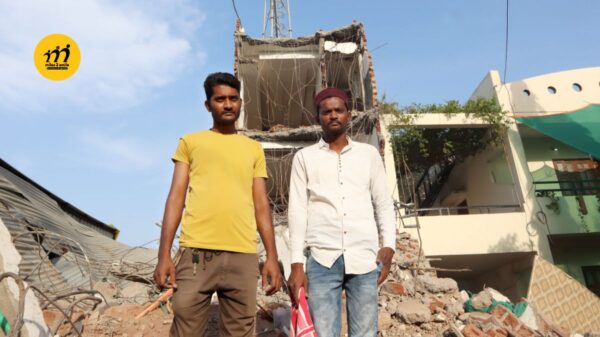
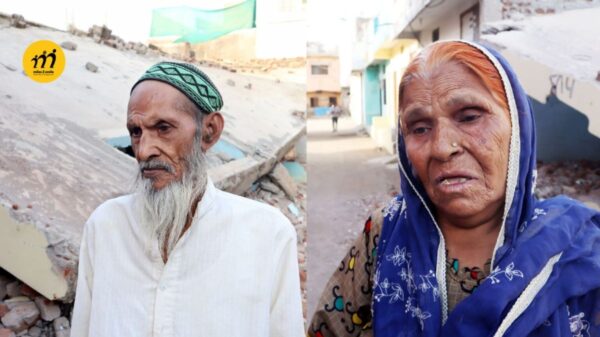









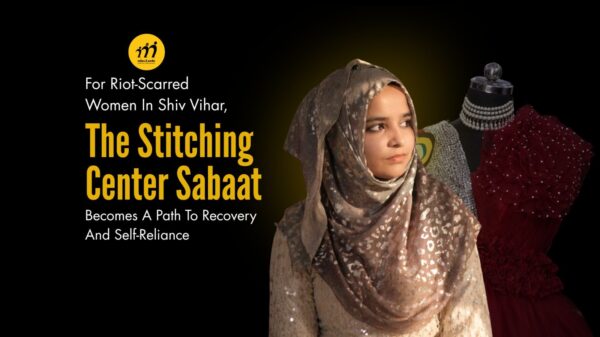

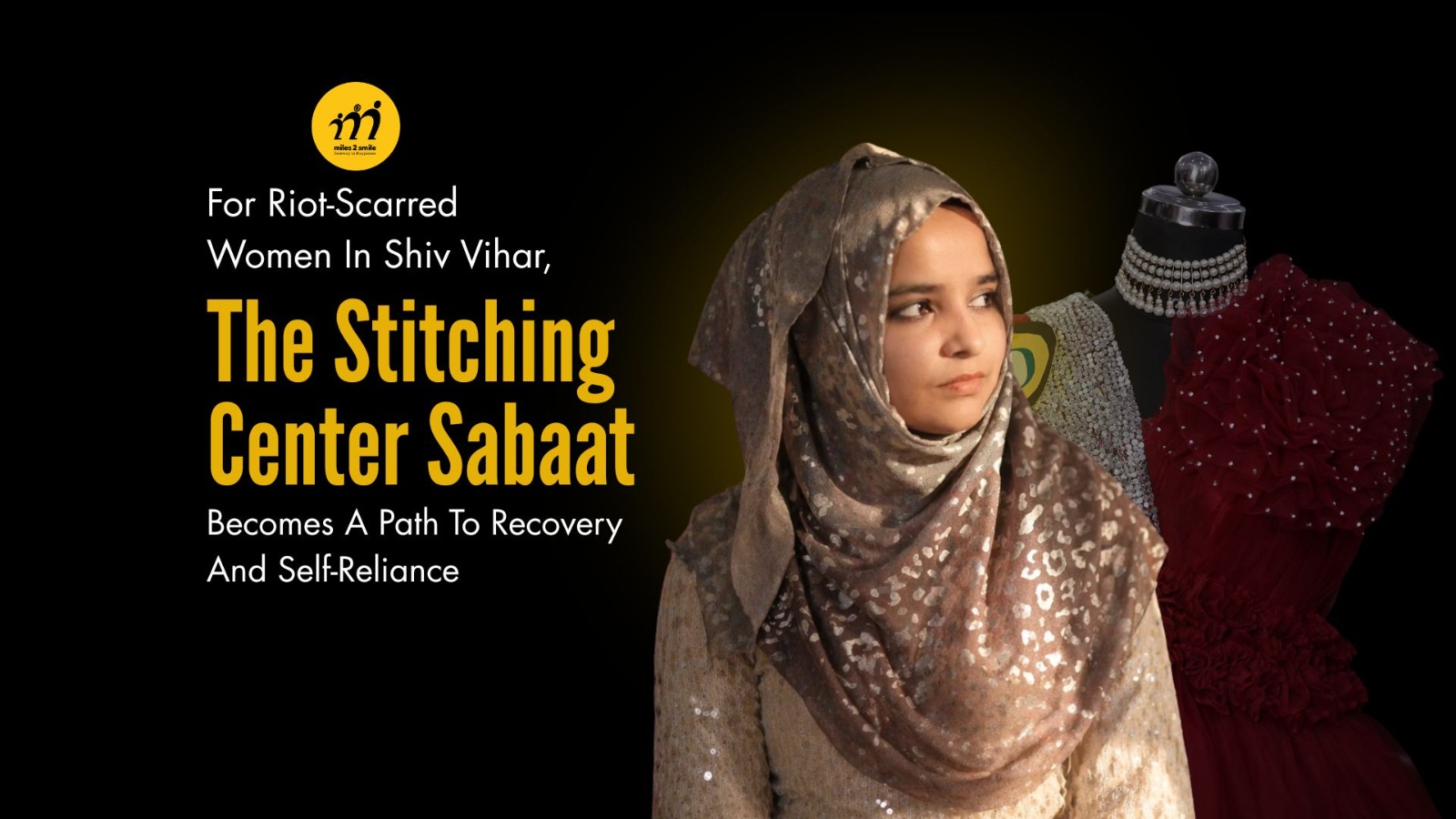

The two-story building of Sabaat, the stitching center, nestled in the dilapidated building of Shiv Vihar, North East Delh, has seen many a fray of pain, hatred, anguish, and losses. Its emergence was not of grand and gala festivities but of mourning and tears. Tears which flowed heavily not only from eyes but also from hearts.
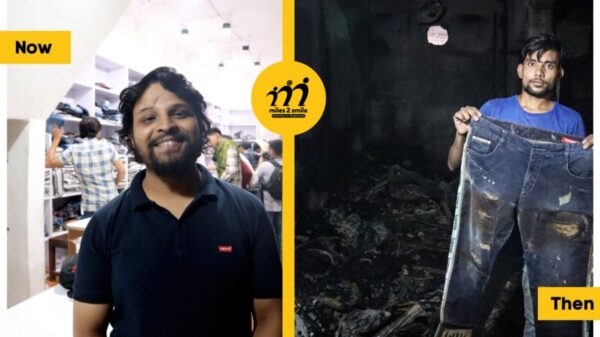
Sabaat, meaning “endurance,” takes its birth from the Delhi riots 2020, which swallowed at least 54 lives and left at least 23 women as widows, distraught and anguished, with no concrete source of income.
Alongside this were the young girls, who witnessed burning, arson, migration, and loss of family members. Their hearts became too delicate to make it a house of pain, and their minds were cluttered with haunting memories of what broke the bliss of their lives.
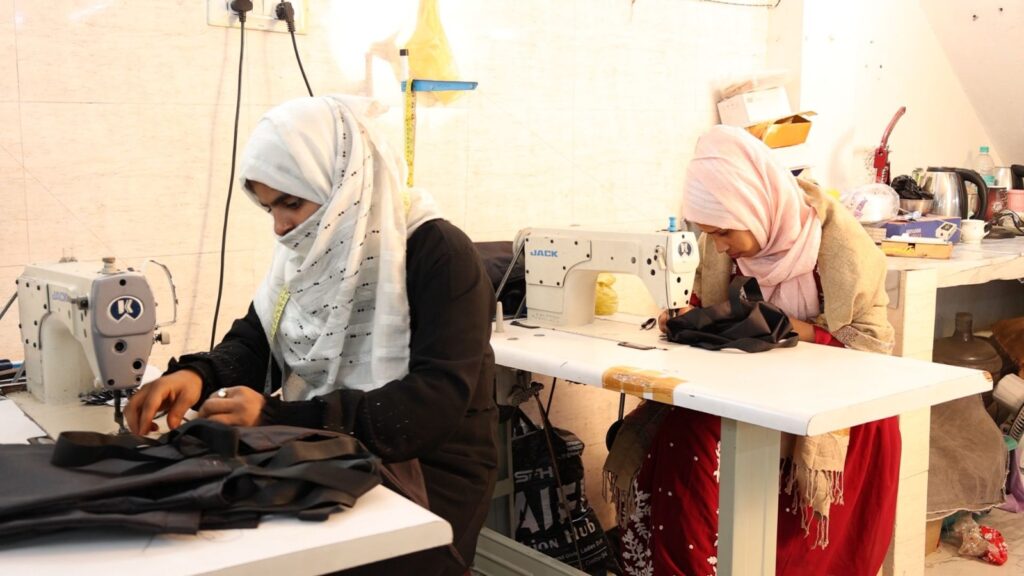
The place Sabaat aimed not only to teach the young girls stitching and transform them into self-assured individuals but also to create a space for them to channel their agony. Soon the place became a happy dwelling for these girls, stepping daily into their classes with one aim: to learn more and to soar high.
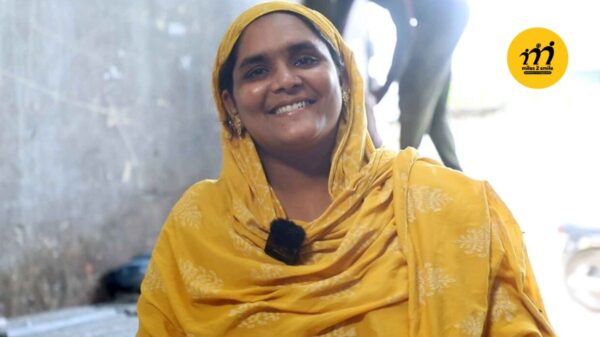
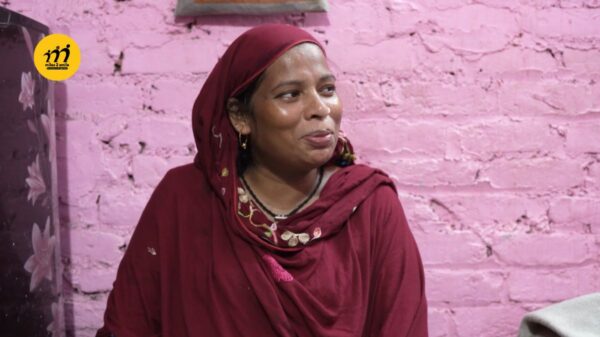
One among them is Mehvish, aged 20. “The place and people have become like a family,” she says.
Mehivish, a six-month certificate holder of the Sabaat stitching course, describes the classes and her journey as “an opportunity for professional growth.” Having cleared her basic course, she “envisions attaining advance training.”

The loss, The pain, and The road towards Recovery
Holding strong love for their house, Mehvish and her family decided not to flee when riots unfolded. However, soon, the situation intensified and took the shape of a “nightmare,” which Mehvish tries to erode from her memories but fails to do.
“I don’t like talking about all that; it makes my heart feel uneasy. I just can’t forget the riots, no matter how hard I try,” she says.
“We were at home when the riots broke out. We had decided we wouldn’t leave, but then the mosque was attacked and cylinders exploded. What we saw was terrifying so we had no choice but to leave our home,” she adds.
“We suffered such heavy losses everything was burned, everything was destroyed. Now, at least, the condition of our home is better than before,” she says.
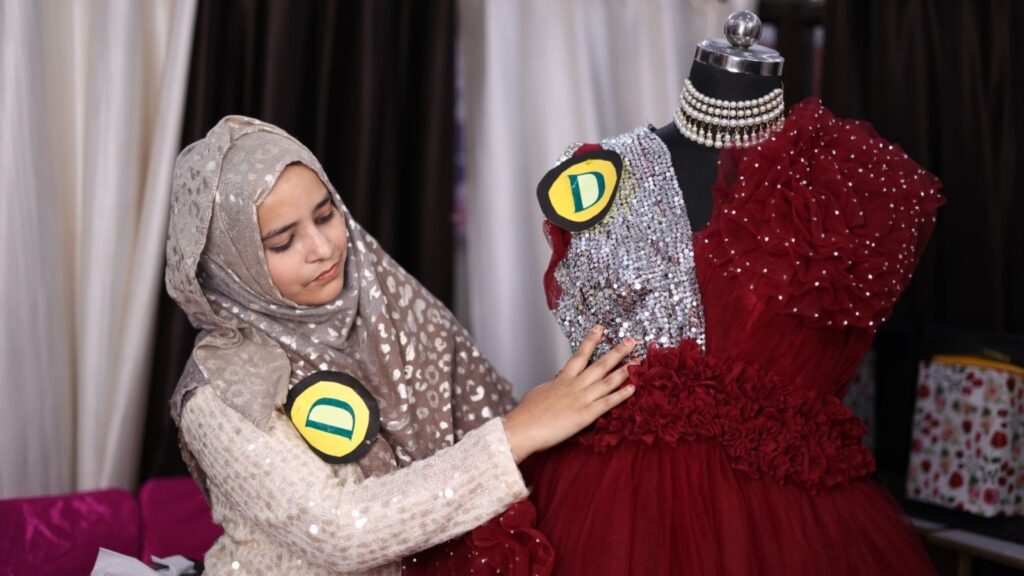
Devastated by the losses the riots claimed, Mehvish struggled to sleep and eat. Days turned into months, and months turned into years, but the traces of riots still lingered. However, The straggles wanes significantly due to the classes she takes at Sabaat. They help her to learn, engage, feel safe, and count a breath of gratitude.
“Everyone here is very kind—the people are really good. I’ve made friends with all of them; they make me feel like I belong. We learn together, talk to each other, lighten our hearts, and make life a little easier,” she says.
“Before coming here, I only knew how to thread a needle. Now I can stitch everything. Whatever I could never afford to buy, I make myself and whatever I like, I create on my own,” Mehvish says.
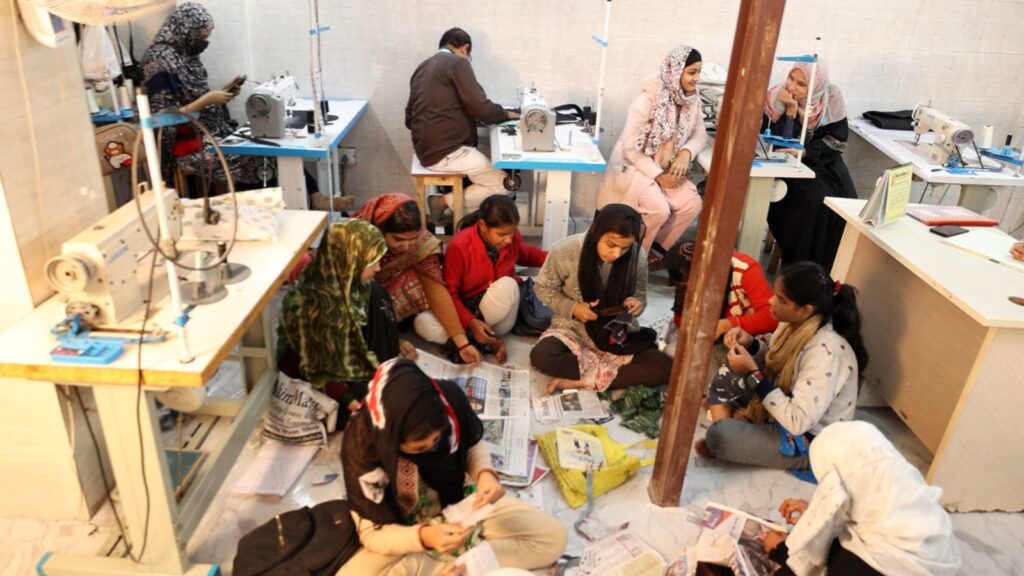
Sabaat’s six-month stitching course trains the students not only on the basics of sewing and cutting but also gives them comprehensive practical exposure through high-tech machinery, workshops, exhibitions, and competitions.
The educator, Farheen Ansari, a fashion designer by profession, teaches students with love and care. Helping them cut fabric and transform it into beautiful abayas, scarves, lehengas, gowns, suits, and more.
“In the beginning, people were very afraid and hesitant to send women. They didn’t want them to come. We had to explain that moving forward was necessary,” she says.
“Now, they see the changes Sabaat brings, and they willingly send their daughters here. It fills my heart with happiness to see young girls turning into confident individuals through Sabaat,” she adds.